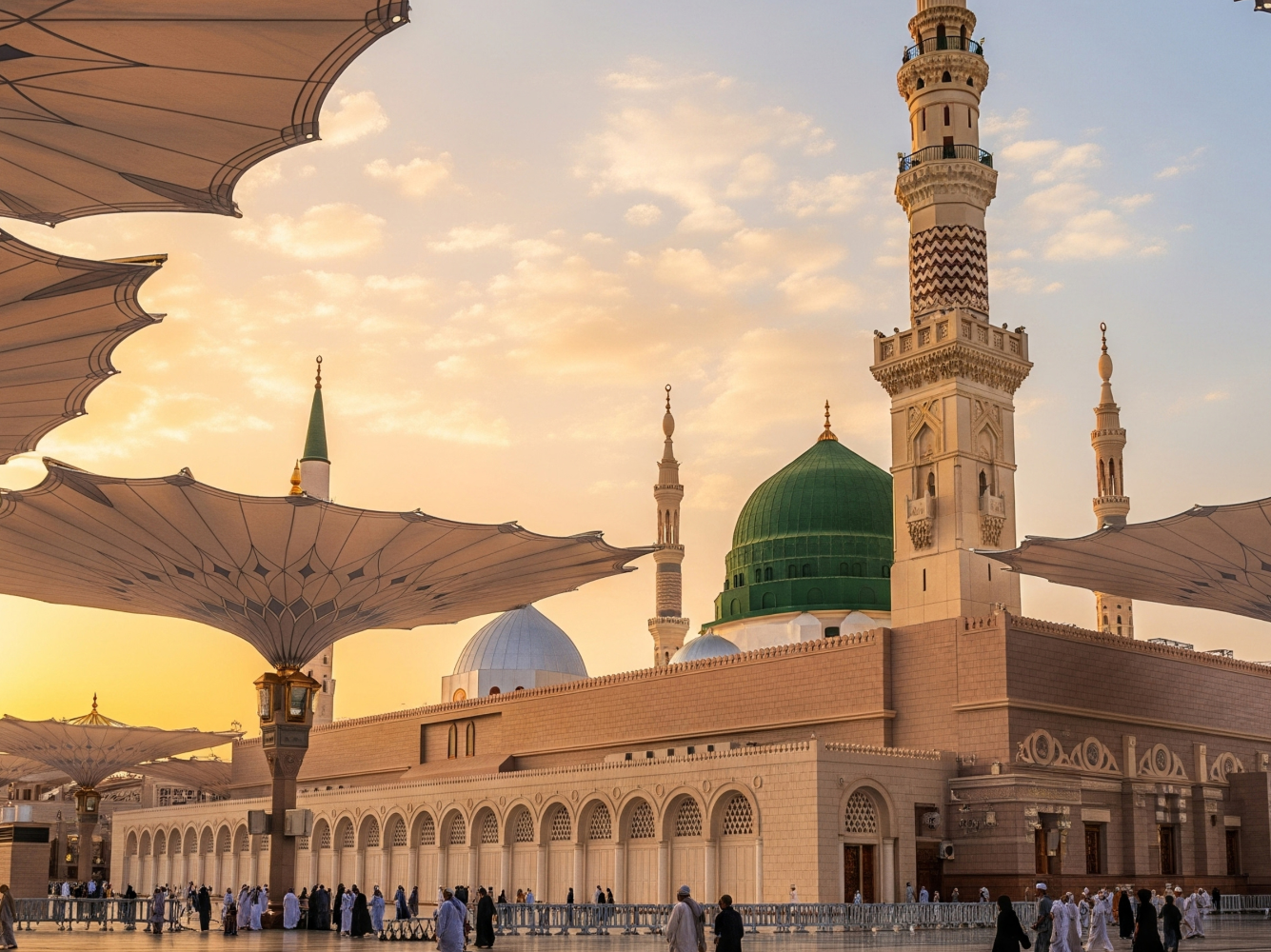
Plan Ramadan fundraising that works: donor insights, a timeline, storytelling, donation page tips, and zakat trust. Built for Muslim nonprofits

In this guide 14
Your donors are already planning their Ramadan giving
It is 2 a.m. in the last ten nights. Your supporter just finished taraweeh, they are scrolling, and their thumb is hovering over a donate button. They have already given to a few organizations this month.
Whose page do they open next?
That choice is not made at 2 a.m. It is made weeks earlier, when your donor quietly decides which charities feel clear, trustworthy and worth their sadaqah.
If you run fundraising at a Muslim nonprofit, you already know Ramadan plays by its own rules. People are not just giving more. They are giving with intention, looking for the best home for their zakat, and paying close attention to who they trust.
Ramadan 2027 is expected to begin around February 8, so the planning window is open right now. This guide walks you through the whole season: how Muslim donors give, a week-by-week timeline, storytelling, your donation page, ads, and keeping donors after Eid. Grab a chai (or wait until iftar) and let’s get into it.
Why Ramadan is the biggest fundraising moment of your year
Ramadan is not just a busy month. For many Muslim nonprofits, it is the month that decides the year.
The reason is simple. During Ramadan, Muslims place extra weight on prayer, charity and self-discipline, so giving becomes part of daily worship (Gulf News). The numbers follow: Donorbox reported that Muslim organizations raised over $25 million on its platform in 2025, with donations rising by up to 340% during Ramadan. That figure comes from a software company’s own data and says “up to,” so treat it as a signal, not a promise.
Here are the Ramadan 2027 dates to plan around, all subject to moon sighting:
Ramadan moves about 10 to 11 days earlier each year, which is why your fundraising calendar never stays put. This year it lands roughly ten weeks after Giving Tuesday on December 1, so your two biggest campaigns sit close together. Our Giving Tuesday 2026 playbook shows how to use one to prime the other.
Big giving moments are also crowded ones. Your donors hear from many organizations at once, and they give most to the ones they already trust. That is how Al-Madina increased Ramadan donations by 72%: by building year-round, value-driven content instead of leaning on appeals.
How Muslim donors actually give
Here is a question worth sitting with: when someone donates on your page, are they buying something or worshipping? Trick question. They are doing both, and they are judging your trustworthiness the whole time.
Know these four terms before you write a single appeal:
- Zakat
- the annual obligation of 2.5% of qualifying wealth above the nisab threshold. Donors want proof it reaches eligible recipients.
- Sadaqah
- voluntary charity, given at any time. It suits general appeals and daily giving.
- Zakat al-fitr
- a payment due before the Eid prayer that helps the poor join the Eid celebrations (Donorbox).
- The last ten nights
- many donors give with extra intention while seeking Laylat al-Qadr, so plan for this stretch as a likely peak.
Now the numbers. In a 2023 Indiana University survey of 1,136 US Muslims, 69.3% said they always give zakat during Ramadan (Chronicle of Philanthropy). The researchers found that women, married couples, people in their 30s, very religious respondents and registered voters were most likely to give the bulk of their zakat. Those findings are US-based, so check them against your own donor data before you build segments around them.
What this means for your campaign:
- 01
Label what is zakat-eligible clearly, and confirm your wording with your scholar or Shariah advisor.
- 02
Let donors choose zakat or sadaqah on the same page.
- 03
Show exactly where each amount goes.
- 04
Keep the tone sincere. This is worship, not a sales pitch.
The Ramadan fundraising timeline: from 12 weeks out to Eid
Ramadan campaigns are won in the weeks before the month, not during it. By the time the crescent is sighted, your donation page, creative and email flows should already be built and tested.
Fundraising consultant Ndidi Okakpu, CFRE, recommends starting implementation at least four to six months before Ramadan, leaving a gap of two to three months between your last appeal and Ramadan to avoid donor fatigue, and releasing your event calendar three to four weeks ahead. If that window has already passed, do not panic. Compress the steps below and protect the basics.
The table uses Ramadan 2027 (expected February 8) as its example. Shift the dates each year.
Dates are approximate and depend on moon sighting.
Pick one big idea and one number to chase
Most Ramadan campaigns stall for a boring reason: they try to say everything. Ten programs, five appeals, and a donor who closes the tab.
Start with a specific goal. Not “raise more,” but a set amount, a set number of new monthly donors, or a set number of new email subscribers. Then split your audience:
- Past Ramadan donors
- they already trust you. Ask them to give again, or to give monthly.
- Year-round donors who skipped Ramadan last time
- remind them what Ramadan giving can do.
- Cold audiences
- warm them up with value first, not a donate button.
Next, choose one campaign idea that ties everything together: one theme, one emotional promise, one clear action. “Feed one family every day of Ramadan” beats a list of programs every time.
Daily rhythm is a proven shape. When LaunchGood worked with Sunan on Dhul Hijjah, the idea was to turn a single donation moment into daily, automated giving, which activated $7.5M+ in 10 days. The same logic applies to Ramadan: give donors a rhythm, not a one-off ask.
Here is a quick test for your big idea. Can a donor explain it to a friend in one sentence? If not, simplify.
Tell stories that move donors without using people as props
Skip the slideshow of sad statistics. Donors rarely give to a number. They give to a person and a promise.
A story shape that works every time:
- 01
One person, with a name and, with their consent, a face.
- 02
One clear need, in their own words where possible.
- 03
One action the donor can take, with a specific cost attached.
- 04
One follow-up that shows what happened next.
That last step is the one most organizations skip, and it is the one that makes donors come back.
Keep these dignity rules non-negotiable:
- Get informed consent for every story and image, especially involving children.
- Show people as capable, not helpless.
- Build urgency from facts and timing, not from shame or graphic imagery.
- Use real photos from the real project. Never reuse images from a different crisis.
- Keep religious language accurate and sincere, and have your scholar or advisor review it.
Ramadan gives you story material that other seasons do not. Think of a family’s iftar table, a child’s first Eid outfit in years, or a water well that keeps serving a village long after the month ends. Each one connects the donor’s act of worship to a result they can picture.
When the story is strong and the facts are honest, you do not need to shout. Donors feel the difference.
Build a donation page that actually converts
You can run flawless ads and still waste the money if the page at the end is confusing. Your donation page is where Ramadan intention turns into a gift, so treat it like your most important employee.
Use this checklist:
- A dedicated Ramadan page.
- A campaign-specific landing page beats sending people to a generic donate button. Keep it simple, with one clear call to action.
- A zakat calculator.
- Embed or link one, and add the nisab explanation in plain language so donors feel confident about their number.
- Zakat and sadaqah options.
- Let donors designate, and always allow a general donation for people who are not paying zakat.
- Giving levels tied to outcomes.
- “$50 feeds a family for a week” converts better than a bare amount. Use real, verified costs.
- A monthly or daily toggle.
- Make recurring giving one tap, especially for last ten nights and daily giving.
- Fast, mobile-first design.
- Most donors will arrive from a phone after iftar or taraweeh, so load time and thumb-friendly buttons matter.
- Easy payment.
- Offer cards plus digital wallets, and keep the form short.
- Trust signals.
- Show your registration or charity number, where the money goes, and a recent impact update.
- Progress and social proof.
- A goal meter and a donor wall encourage people to join in.
- Share buttons.
- Let supporters pass the page on to family WhatsApp groups with one tap.
Before launch, test the whole flow on a real phone, from ad click to thank-you email. If you would stop halfway through, your donors will too.
Daily giving, the last ten nights and matching gifts
Ramadan is not one campaign. It is a string of moments, and each one has its own energy. Here is how to work them.
Daily giving. Donors want to give every day, so let them. LaunchGood’s Daily Givers program, built with Sunan, raised over $730k in a year by inspiring Muslims to commit to daily giving. In Ramadan, a small daily amount that donors set once and forget is a gentle way to build a habit that outlasts the month.
The last ten nights. This is your highest-intent window, so give it its own creative and its own plan. Many donors focus on the odd nights while seeking Laylat al-Qadr, so build night-by-night moments around them and increase your email and ad frequency.
Matching gifts. A match gives donors a reason to act now, such as “every dollar doubled until midnight.” Look to major donors, local businesses and employer programs. Only announce a match you have actually secured, and state the rules and deadline clearly.
Iftars and events. Fundraising iftars are a Ramadan classic, but the dinner is not where the work happens. Okakpu notes that 60 to 70 percent of funds are often already pledged before a gala, and the event mostly announces those commitments. Do your calls and personal invitations weeks ahead.
Peer-to-peer fundraising. Let supporters raise money in their own circles, from family WhatsApp groups to workplaces. Give them a ready kit: a shareable graphic, a short message they can personalize, and their own page link.
Email, SMS and social: find your Ramadan rhythm
There is a free content calendar hiding in plain sight. Muslims reflect on three themes during Ramadan, mercy, forgiveness and refuge, spending about ten days on each. Reporting in the Chronicle of Philanthropy described how IMANA built its twice-weekly emails around those phases, pairing each program with a fitting verse. Use the same three-part arc to organize your messaging.
Also set expectations early. IMANA’s team has described a typical lag of about two weeks between an initial direct-mail appeal and the first gifts, with most giving arriving in the last ten days. A quiet first week does not mean your campaign is failing.
- Segment your list. Islamic Relief USA has sent recent donors a greeting and a direct ask, while lapsed donors got more detail about the work and why it deserves a gift.
- Start with about two emails a week, then move to daily in the last ten nights.
- Write specific, sincere subject lines. Name the person, the place or the outcome.
- Add a monthly giving ask to your thank-you email.
SMS
- Use permission-based lists only, and keep messages short with one link.
- Save your most urgent texts for the last ten nights.
- Test send times around iftar and after taraweeh, when people are often on their phones.
Social media
- Lead with value. IMANA has posted “Ramadan tips of the day” and then appealed to the people who engaged.
- Repurpose long videos into short clips. That is how Al-Madina achieved 1,570% Instagram growth with Sunan.
- Post daily impact updates in Stories and Reels.
- Design graphics that are easy to forward in family WhatsApp groups.
Show up when donors search: SEO and paid ads
SEO and ads run on different clocks. SEO needs weeks to start paying off, so it goes first. Ads can switch on quickly, so they follow.
SEO: start now
Before Ramadan, donors search for things like zakat calculators, where to pay zakat, how much zakat al-fitr is, and which charity to give to. Build pages that answer those questions honestly:
- A zakat guide with a calculator and a plain-language nisab explanation.
- A zakat al-fitr explainer with the amount and the deadline.
- A page on how donations are used, with real numbers.
- An FAQ section on your Ramadan campaign page.
Keep the same Ramadan page URL every year and update it, rather than creating a new page each season. That way the page’s search authority keeps building. And check that the page is not set to noindex. It happens more often than you would think.
Google Ad Grants: check eligibility
Eligible nonprofits can apply for up to $10,000 a month in free Google Search ads through Google for Nonprofits. Eligibility rules and availability vary by country, so confirm yours before planning around it. The grant covers text ads on Search only, so use it for high-intent searches such as zakat and Ramadan donation terms.
Paid ads: warm up before Ramadan
- Search ads
- catch donors who are ready to give. Point each ad group at a matching landing page.
- Meta and YouTube
- work best with short story videos and with retargeting. Reach website visitors, video viewers and past donors first.
- Test creative in the weeks before Ramadan,
- not on day one, so you know what works when competition for attention peaks.
- Weight your budget toward the last ten nights,
- when intent is highest.
- Tag every link with UTM parameters
- so you can see which channel brought each gift.
Expect more organizations competing for the same donors during Ramadan. Your edge is a clear message, a trusted brand and a page that converts.
Earn trust before you ask for the gift
Donors will forgive a simple page. They will not forgive vague answers about where their zakat goes. In a month when giving is an act of worship, trust is not a nice-to-have. It is the whole product.
Okakpu’s guidance on fundraising with integrity comes down to transparency, clarity about how donations are allocated, responsible stewardship, and setting up the systems for all of that before the campaign starts. Here is how to put that into practice:
- Separate zakat and sadaqah clearly,
- in your funds, your reporting and your donation page.
- State your zakat policy in plain words,
- including whether the full amount reaches beneficiaries and how administrative costs are covered.
- Show your credentials
- registration or charity number, annual report, financial statements, and sign-off from your scholar or Shariah advisor if you have one.
- Report back during Ramadan,
- not just after. A mid-month update with photos, numbers and distribution dates tells donors their money is already at work.
- Never overpromise.
- Say what you can deliver and by when, and then deliver it.
- Handle in-kind gifts carefully.
- If you collect food or clothing, tell donors how you make sure it reaches the intended recipients.
Trust is built on small, repeated proof. Every update you send before the last ten nights makes the biggest asks of the month feel safer to say yes to.
After Eid: this is where the real fundraising starts
Eid is not the finish line. It is the moment your Ramadan donors decide whether they were visiting once or becoming part of your story.
Here is what to do in the weeks after:
- 01
Thank donors quickly and specifically. Name what their gift made possible, not just the amount.
- 02
Share early impact while the experience is fresh, with photos, numbers and a short story.
- 03
Invite one-time donors to give monthly. A daily or monthly program turns a seasonal gift into a steady base. LaunchGood’s Daily Givers is a good model.
- 04
Keep showing up between appeals. Al-Madina’s 72% Ramadan lift came from year-round, value-driven content that built trust before the ask, not from more asks.
- 05
Hold your debrief within days. Okakpu suggests meeting one to three days after a campaign closes and asking three questions: what worked, what did not, and what to improve. Draft next year’s playbook right then.
- 06
Plan your next moment. Okakpu also notes that Dhul Hijjah is often overlooked as a fundraising season, even though it can catalyze giving. LaunchGood’s Dhul Hijjah results show how much is possible.
Your Ramadan donors are the most engaged supporters you will meet all year. Do not let them go quiet.
Eight Ramadan fundraising mistakes to skip
None of these is fatal on its own. Stack a few together and you will feel it by the last ten nights.
- 01
Starting too late. Page, creative and email flows should be built and tested before the crescent is sighted.
- 02
Saying everything at once. Ten programs dilute the message. Pick one big idea.
- 03
Only ever asking. Appeals without value content wear donors out. Teach, share and report between asks.
- 04
Planning an event with no outreach. A great iftar still needs weeks of calls and personal invitations, or it will be poorly attended.
- 05
Blurring zakat and sadaqah. Keep funds, wording and reporting clearly separate.
- 06
A clunky mobile donation page. Most gifts start on a phone, so test the whole flow on one.
- 07
Leaving your board on the sidelines. Match each board member’s strengths and networks to a role that feels natural to them.
- 08
Burning out your team. Staff are worshipping too. Build schedules that protect their prayers and family iftars, and your team will do better work.
The last one is easy to forget and matters most. A rested team writes better emails, answers donors more kindly and spots problems sooner.
Track the numbers that tell you what to do next
You do not need a giant dashboard. Check these seven numbers daily during Ramadan and weekly after it. Use your own last Ramadan as the baseline, since your audience and cause are not the same as anyone else’s.
Use your own last Ramadan as the baseline.
After Eid, add one more: how many Ramadan donors gave again within 90 days. That number tells you whether you built relationships or just collected gifts.
Ramadan fundraising FAQs
When should we start planning Ramadan fundraising?
How much of a nonprofit’s annual income comes from Ramadan?
What is the difference between zakat and sadaqah?
Which days raise the most during Ramadan?
Can non-Muslim or secular nonprofits fundraise during Ramadan?
What should a Ramadan donation page include?
How do we keep Ramadan donors after Eid?
Should we work with a Muslim nonprofit marketing agency?
Your move: start the Ramadan plan this week
Back to that supporter at 2 a.m. in the last ten nights. They are going to give to someone. The only question is whether you spent the weeks before earning the right to be that someone.Ramadan Campaign Readiness Scorecard
Here is the whole guide in four lines:
- Understand how Muslim donors give: zakat, sadaqah and the last ten nights.
- Build your timeline backward from the first day of fasting.
- Tell dignified stories and show your proof.
- Build a page that converts, and a plan that keeps donors after Eid.
Want a second pair of eyes? Sunan helps Islamic nonprofits and humanitarian organizations with Ramadan strategy, storytelling, design, email and paid media. Take a look at our work with Islamic nonprofits and humanitarian organizations, then book a free 30-minute strategy session. Ramadan is coming whether you are ready or not, so let’s get you ready.